Bourbon Government
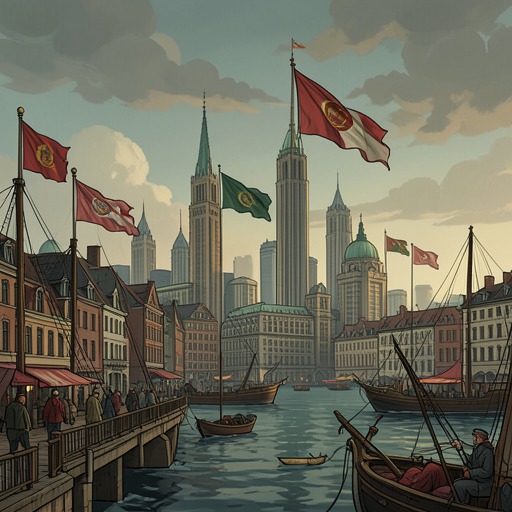
The Florios of SicilyThe Bourbon Government is the governing power against which the novel measures Sicily’s loss of political autonomy and the material costs of rule. Its authority is felt not only in battles and proclamations but in the administration of customs, the collection of taxes, the movement of ships, and the use of local wealth. As the regime’s policies provoke resistance, the Florios are caught between protecting a commercial world built over decades and responding to a revolution that claims to restore Sicilian self-government.
Restoration and the loss of autonomy
After the Bourbons return to Naples, the political divisions among Sicilian cities leave the island poorly positioned to resist central control. From December 1816, state offices and customs are administered by Neapolitans, as are military commands. Palermo consequently loses its power and independence; heavier taxes, trade restrictions, and new constraints compound an economy that is already struggling. The novel connects this administrative change directly to commercial hardship: the economy, already limping, comes to a halt, while Vincenzo Florio confronts payments exceeding earnings and letters of credit nearing expiry.
This loss of autonomy is part of a larger reversal in the island’s fortunes. Sicily had possessed a parliament and a constitutional period, but those institutions do not protect it from centralization. The Bourbon Government’s authority reaches into the everyday channels through which merchants operate: customs administration determines how goods move, and restrictions and taxation narrow the room for trade. The result is not merely a change of rulers but a change in who controls the conditions of Sicilian economic life.
Economic policy and commercial power
The regime’s effects on commerce appear against a wider transformation of Mediterranean trade. By the early nineteenth century, British and French ships bring spices and other colonial goods into open harbors, lowering prices and diversifying markets. Palermo’s aromatari organize as a guild, while wholesalers such as the Florios build their business through imported goods, storage, and onward trade. The Florios rent a warehouse within the Palazzo Steri property, where spices can wait in transit or for sale; under common wholesaling practice, import tariffs are paid when goods enter Palermo rather than earlier. Such arrangements make customs rules and access to port facilities central to commercial survival.
Under Ferdinand II, the Bourbon Government also pursues economic and social revival through infrastructure, engineering, railways, metal-hulled military ships, a pension system, and electrical street lighting. The novel presents this program alongside expanding state interest in Sicily’s resources. Efforts to improve the exploitation of solfataras bring the government into open conflict with British and French buyers determined to purchase sulfur below market prices. Sulfur itself is transformed from a despised feature of the land into a major commodity: men and children labor underground, carry baskets of yellow stone to the surface, and supply markets in France, Britain, and northern Italy. The government’s development ambitions thus coexist with the hard conditions of extraction and the struggle over who controls the value of Sicilian production.
Resistance and the crisis of 1848
Resistance to Bourbon rule grows from accumulated grievances rather than from a single dispute. Giovanni Portalupi describes a climate in which Sicilians resent Neapolitan administrators, taxation on grain, and abuses by soldiers; he also recalls the consequences of the 1837 rebellion, including the punishment and deportation of its leaders. By January 1848, proclamations urging people to take up arms appear across Palermo. Royal guards tear them down, while rumors circulate that the authorities will answer an uprising with rifle fire and executions. The city’s defiance of soldiers and its anger at taxes and tyranny signal that ordinary enforcement no longer commands unquestioned obedience.
On January 12, Giuseppe La Masa and Rosolino Pilo lead an insurrection in Palermo against the Bourbons. It is the first large city in Italy to declare independence from central power. The revolt spreads beyond the city: Vincenzo reports that country rebels have arrived, that people from Bagheria may be present in force, and that fighters have taken city gates while troops retreat to barracks and government sites. The competing reports of a disarmed garrison, a barricaded Royal Palace, and a king preparing to yield convey the uncertainty of a state whose authority is being challenged in the streets.
The revolutionary government seeks to involve both aristocrats and the bourgeoisie in decision-making, and Ferdinand grants a constitution. But the movement’s coalition is fragile. Aristocrats and bourgeois supporters hope to gain wealth, including through Church property, while poorer people seek a redistribution of land. The island’s political divisions and these incompatible aims weaken the rebellion. In May 1849, pursued and weakened by Bourbon troops, the revolutionary administration surrenders. Ferdinand spares its leaders from execution but sends them into exile and pardons supporters of the revolt. The concession of a constitution has not secured lasting self-government; the uprising ends in defeat and renewed Bourbon authority.
Merchants between regimes
The Florios’ dealings with the Bourbon Government reveal how state power can make a merchant both vulnerable to authority and useful to it. During the 1848 upheaval, customs are thrown into disorder, outgoing ships are blocked, and merchants fear that goods may be requisitioned. Ignazio learns of the stoppage through Ben Ingham and hurries to the Customs House, where merchants and sailors gather before soldiers attempting to hold the crowd back. Political crisis becomes an immediate threat to shipments, contracts, and the movement of goods.
Vincenzo’s response to the revolutionary government is similarly shaped by commercial calculation and civic danger. He buys a large shipment of rifles in England on behalf of the revolutionary committee, even as he recognizes the risks of supplying a government that has proclaimed the Kingdom of Sicily without securing a king. Ships are requisitioned, and the Sicilian Steamship Company’s vessel Palermo is taken to transport troops. Vincenzo says trade has fallen by half since the revolt began; his merchant bank, foundry, and shipping interests are all exposed to the conflict. His participation does not erase his misgivings: he resents a war being waged with the money he spent a lifetime building, even while acknowledging the commitment of revolutionary leaders such as Ruggero Settimo.
The contest over sovereignty continues after the Bourbon Government’s defeat. As Giuseppe Garibaldi’s forces approach, Vincenzo, acting as a trade governor, orders all cash and bank drafts transferred to a safe, intending that the money be returned to circulation or converted into a new currency once the crisis passes. He cannot prevent the expected requisition of the treasury’s substantial gold supply. Later, he argues that Piedmontese rule is turning Sicily into a colony and objects to the seizure of the Bourbon Crown treasury and its transfer to Piedmont to finance annexation. The novel therefore sets Bourbon centralization beside the new state’s claims on Sicilian resources: a change of regime does not end the struggle over who governs the island or commands its wealth.
Narrative significance
The Bourbon Government is portrayed through the points where political authority touches material life: a customs office, a blocked harbor, a tax burden, a requisitioned ship, and a threatened treasury. That emphasis makes the Florios’ commercial fortunes inseparable from constitutional and military change. Their warehouses and shipping routes depend on rules set by governments, while their money and infrastructure become resources that competing authorities seek to control.
The regime’s history also complicates the distinction between order and freedom. Bourbon programs for infrastructure and technical development coexist with centralization and coercive rule; the revolution’s promise of Sicilian independence, in turn, is weakened by internal divisions and competing social aims. The Bourbon Government’s defeat does not resolve the island’s subordination. Its significance lies in the enduring pattern the novel traces: Sicily’s political power and economic resources remain contested, and merchants such as the Florios must adapt as each authority claims the right to direct them.